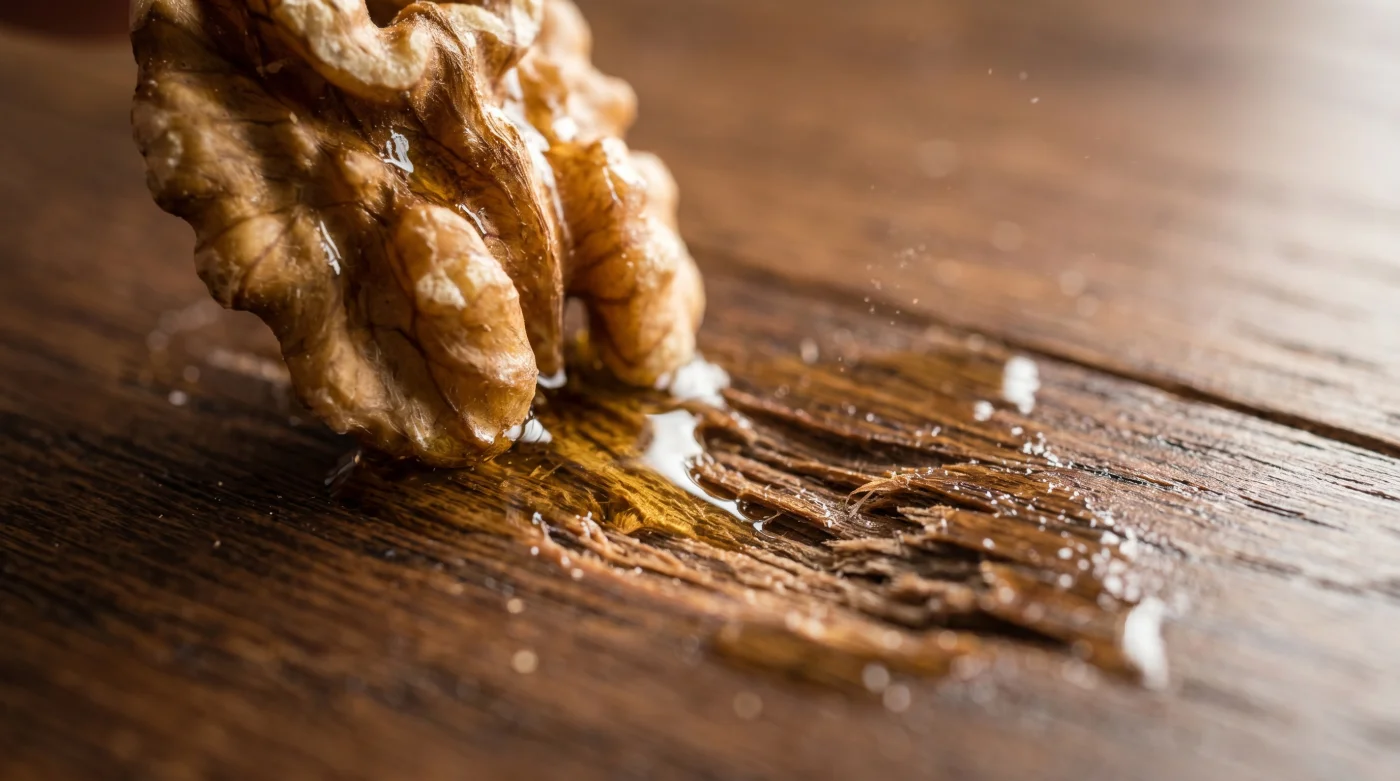
The late afternoon sun has a habit of exposing truths in a home. When that low, amber light rakes across your Canadian hardwood floors, it inevitably catches the sharp, white edge of a fresh scratch. It’s the visual echo of a dragged dining chair or a dropped set of keys, interrupting the calm expanse of the room.
Your immediate instinct is likely panic, followed by a reluctant calculation of repair costs. You picture breathing through a pillow to tolerate the toxic fumes of expensive chemical wood fillers, sanding dust settling over your furniture, and the creeping fear that the patch will look worse than the scar.
But professional restoration doesn’t always demand harsh abrasives or synthetic compounds. Whether you live miles from a hardware store or simply want to avoid a chaotic trip into town, the most sophisticated chemical reaction occurs with something entirely mundane, sitting quietly in a bowl on your kitchen counter.
The raw walnut is often dismissed as just a baking ingredient. Yet, when applied with deliberate friction, its natural oils chemically bind with existing finishes, shifting a glaring flaw into a seamless, protected advantage.
The Lipid Bridge: Rethinking Wood Repair
Think of a scratch on polyurethane-coated wood not as a structural failure, but as a dry, exposed nerve. When you force a synthetic wax or plastic putty into that gap, you are merely packing a void with dead material. It sits there, stubbornly refusing to adapt to the wood’s natural expansion and contraction as the seasons shift from damp springs to brittle, dry winters.
A raw walnut changes the entire mechanism of repair. It offers a living, botanical wood resin that mimics the very polymers used to seal your floors in the first place.
As you rub the meat of the nut against the sharp edges of the scratch, the friction generates mild heat. This temperature shift releases the nut’s linoleic and oleic acids. Instead of just sitting on the surface, these oils seep into the exposed timber, expanding the compressed wood fibres while simultaneously bonding with the surrounding polyurethane.
This defies the need for synthetic plastic wood fillers. The raw nut doesn’t just camouflage the damage; it actively cures inside the gouge, creating a waterproof, flexible seal that ages beautifully alongside your floorboards.
Elias Vance, a 62-year-old heritage floor restorer working out of Victoria, BC, rarely carries modern putties in his kit. He keeps a small muslin pouch of raw, unsalted walnuts next to his chisels. He once demonstrated the technique to an apprentice on a century-old Douglas Fir plank, explaining how the nut’s oils act as a lipid bridge, cross-linking with the aged floor finish to lock out moisture and dirt permanently.
Adjustment Layers for Canadian Timber
Not all floors react to this organic compound with the exact same speed. You must read the wood grain to understand how the walnut oil will penetrate and cure over time.
For the Birch and Maple Purist
Lighter woods like Canadian maple have an incredibly tight grain structure. Scratches here often look stark white. When working with these dense species, the goal is surface blending rather than deep filling. You are relying on the walnut’s oil to darken the raw, exposed fibres just enough to match the honey-toned polyurethane above it.
- BREAKING: New municipal zoning codes quietly ban natural gas stoves in residential renovations
- BREAKING: Sudden Canadian export limits on peat moss trigger massive retail soil shortages
- Professional cleaners leave shaving cream on bathroom grout to lift years of dark mold
- HVAC technicians cut standard furnace filters to instantly boost winter household airflow
- The inexpensive tension rod trick that instantly doubles deep pantry storage space
- Small engine mechanics spray WD-40 on snowblower augers to triple the engine lifespan
- The 5-minute white vinegar pour that permanently prevents winter sump pump failures
- Landscapers buy premium cedar mulch for pennies by asking local sawmills this single question
- Renters use a simple toothpaste mixture to completely dissolve drywall anchor holes
- Why rubbing raw walnuts on Canadian hardwood floors permanently erases deep scratches
For the Heritage Oak Keeper
Red and white oak floors feature deep, porous grains that easily trap dirt if left unsealed. Here, the actual meat of the walnut provides physical substance. The friction packs the gouge with microscopic organic matter, while the oil hardens around it, replacing the structural integrity of the torn wood.
For the Busy Parent
High-traffic zones in hallways or kitchens suffer a constant barrage of micro-scratches from pet claws and sliding toys. Instead of agonizing over a massive refinishing project, the walnut technique allows for targeted, spot-treatment maintenance. You can address a glaring mark in seconds, blending it away before the next chaotic wave of the day hits.
The Friction and Cure Technique
Executing this repair requires a shift away from aggressive scrubbing. You are encouraging a chemical reaction, not trying to sand down a surface. Keep your movements intentional and slow.
Ensure the room is comfortably warm, ideally around 20 Celsius, to help the oils release from the nut.
- Clean the wound: Wipe the scratch with a slightly damp microfibre cloth to remove microscopic grit. Let it dry completely.
- Snap the nut: Break a raw, unsalted walnut in half to expose the fresh, jagged meat inside.
- Apply diagonal friction: Rub the exposed nut directly over the scratch, pressing firmly. Move diagonally across the cut, not parallel, to shear the oil into the gap.
- Let it cure: Leave the area completely alone for 15 minutes. The oil needs this time to chemically bind with the polyurethane finishes.
- Buff the perimeter: Use a soft, dry cotton cloth to gently polish the edges, blending the newly deposited oil into the surrounding floor.
This tactical toolkit requires no heavy machinery. Your own body heat, transferred through the pressure of your fingers, is the catalyst for the cure.
If the scratch is particularly deep, you may need to repeat this process twice, allowing a full 24 hours between applications. The oil builds upon itself, creating microscopic layers of protection.
Redefining Home Maintenance
Maintaining a home often feels like a constant battle against entropy. Every mark on the floor or dent in the wall is a reminder of wear and tear. But mastering this simple, botanical fix allows you to reclaim agency over upkeep.
You stop viewing a dropped mug as a catastrophe. By understanding how natural elements interact with commercial finishes, it transforms a frustrating damage-control scenario into a quiet, oddly satisfying ritual of care.
The floor ceases to be a fragile museum piece that demands expensive, toxic interventions. It becomes a living surface that simply requires the right nourishment to heal properly.
“The line between a permanent scar and natural character often comes down to three drops of the right oil applied at the right time.”
| Key Point | Detail | Added Value for the Reader |
|---|---|---|
| Chemical Binding | Walnut oils link with polyurethane polymers. | Eliminates the need to buy and match toxic floor resins. |
| Friction Application | Heat releases linoleic acids into the wood. | Creates a waterproof seal that resists future moisture damage. |
| Diagonal Buffing | Cross-hatching the nut over the scratch. | Pushes the maximum amount of protective material into the deepest part of the gouge. |
Frequent Concerns
Will this attract pests or bugs?
No. Once the oils cure and harden into the polyurethane finish, they are entirely sealed and hold no nutritional scent for pests.
Can I use roasted or salted walnuts?
Never. Salt will act as an abrasive, worsening the scratch, and roasting destroys the active linoleic acids required for binding.
Does this work on engineered hardwood?
Yes, provided the scratch hasn’t penetrated completely through the top veneer layer into the core board beneath.
What if I have a nut allergy in the house?
If airborne allergies are a concern, avoid this method. However, for contact allergies, the cured oil poses minimal risk once fully hardened and buffed.
Will the floor feel greasy afterward?
Only if you skip the final buffing stage. Wiping away the excess after the 15-minute cure time leaves the surface perfectly smooth and dry.