You know the sound. It’s two in the morning on a late November Tuesday, the freezing rain is lashing against the siding, and the house is completely quiet except for the slow breathing of the furnace. You are lying awake in the dark, waiting for the reassuring thud and hum from the basement—the sound of your sump pump pushing the rising groundwater away from your foundation.
When that familiar vibration doesn’t come, panic sets in immediately. You imagine wet drywall and ruined cardboard boxes, mentally calculating the cost of a ruined basement while reaching for your slippers. Standard homeowner advice tells you to tug on the float switch every October, assuming that if the mechanical arm clicks, you are safe from the impending winter storms and the messy spring thaw.
But checking the mechanical switch only tells you the brain of the machine works. It completely ignores the heart. Down in the dark, cold basin of the sump pit, something silent and heavy is slowly choking the mechanism, turning a perfectly good motor into a useless brick of plastic and steel right before you need it most.
The Invisible Plaque Under Your Floorboards
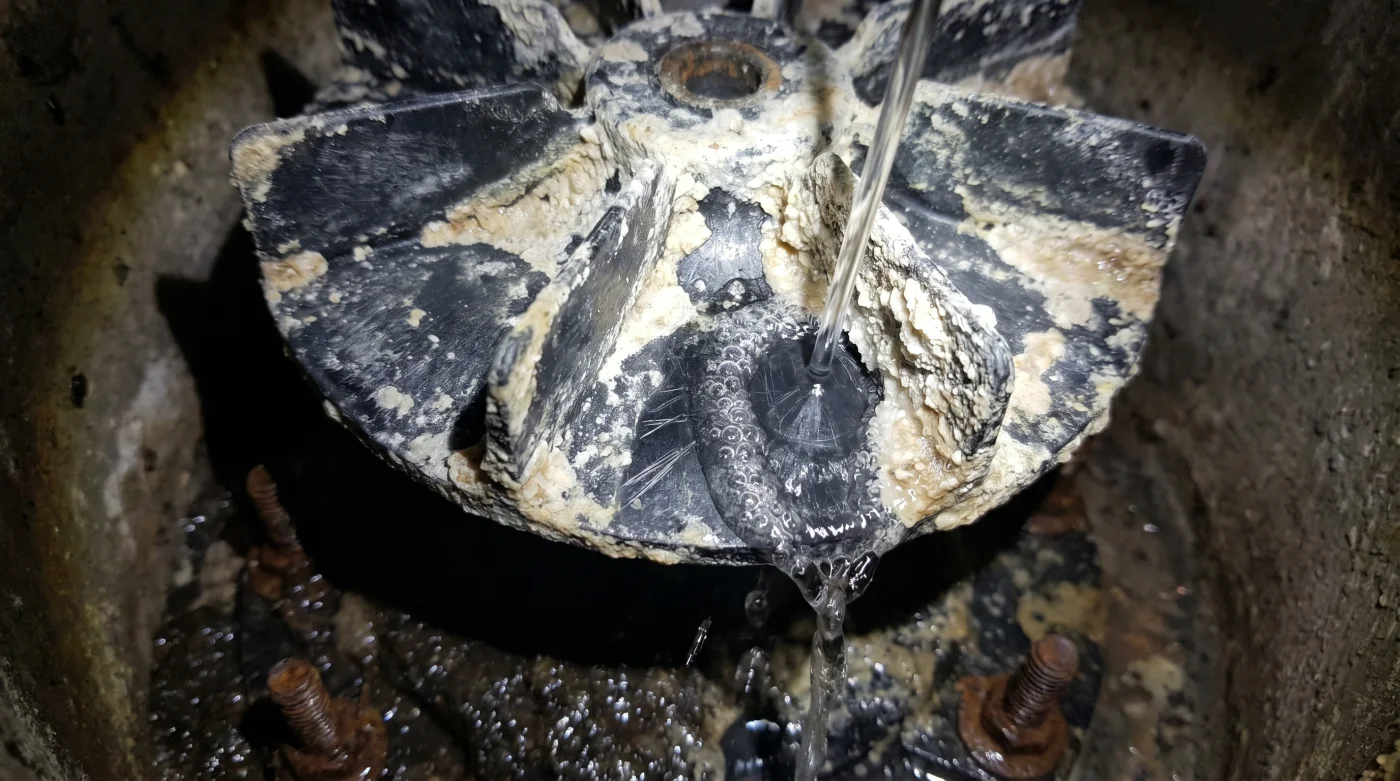
Think of the pump’s impeller—the spinning fan at the bottom that actually pushes the water up the pipe—like the cartilage in a moving joint. It needs to glide freely, without the slightest bit of friction. But when groundwater seeps through Canadian soil, it carries a heavy payload of dissolved limestone, calcium, and magnesium.
Over months of sitting partially submerged, these dissolved minerals latch onto the plastic blades and the stainless steel shaft. They dry into microscopic scales, forming a hardened, concrete-like shell that locks the impeller in place. The motor receives the electrical signal to turn on, the switch clicks, but the blades physically cannot spin.
You do not have a broken pump; you have a seized pump. The motor strains silently against this tight mineral grip, overheats in a matter of minutes, and quietly burns out while the water continues to rise over the lip of the pit. The solution is not a larger motor or complicated mechanical teardowns. It is simply softening the grip.
David Tremblay, a 52-year-old waterproofing specialist working out of rural Nova Scotia, spent a decade replacing sump pumps that frantic homeowners swore were completely dead. One winter, he started taking the supposedly broken units back to his heated workshop, dropping them into a bucket of mild acid just to clean them up for scrap parts. He quickly realized that nearly seventy percent of those expensive motors were in perfect working order. They had simply calcified. David stopped selling new pumps to his regulars and began teaching them a ridiculously simple trick using a cheap pantry staple.
Reading the Water: Foundation Profiles
Not all groundwater is the same, and the way your pump chokes will depend entirely on the earth buried around your foundation walls. Understanding your soil type dictates how aggressively you need to treat the basin.
For the Limestone Bedrock Build: If your home sits on a limestone shelf or heavily rocky soil, you are dealing with pure calcium carbonate. This forms a white, chalky crust that looks like dried salt. It hardens quickly when the water level drops, acting like a parking brake on the impeller shaft. You will need to perform this clearing ritual at least twice a winter.
- Landscapers buy premium cedar mulch for pennies by asking local sawmills this single question
- Renters use a simple toothpaste mixture to completely dissolve drywall anchor holes
- Why rubbing raw walnuts on Canadian hardwood floors permanently erases deep scratches
- BREAKING: New municipal zoning codes quietly ban natural gas stoves in residential renovations
- BREAKING: Sudden Canadian export limits on peat moss trigger massive retail soil shortages
- Professional cleaners leave shaving cream on bathroom grout to lift years of dark mold
- HVAC technicians cut standard furnace filters to instantly boost winter household airflow
- The inexpensive tension rod trick that instantly doubles deep pantry storage space
- Small engine mechanics spray WD-40 on snowblower augers to triple the engine lifespan
- The 5-minute white vinegar pour that permanently prevents winter sump pump failures
For the High-Iron Property: If your basement toilet bowl often develops a faint pink or orange ring, your groundwater is rich in iron bacteria. This doesn’t form a chalky crust; it creates a thick slime that turns into a rigid glue when exposed to cold air. The vinegar cuts through the slime just as effectively as the chalk, but you may need to wipe the float switch clean manually.
For the Clay-Heavy Suburb: New developments built on dense clay suffer from fine silt that binds with minor minerals to create a heavy sludge. This sludge bakes solid against the warm motor housing. For clay soils, adding a litre of warm water to the vinegar helps penetrate the muddy casing.
The Five-Minute Vinegar Ritual
This is not a heavy maintenance chore that requires work gloves and a wrench. It is a quiet, deliberate clearing of the throat for your home’s most vital defense system. You are using standard, four-percent acidic white household vinegar to safely dissolve the calcium bonds without eating away at the rubber seals.
Here is your tactical toolkit:
- Four cups of standard white vinegar.
- Two cups of hot tap water (not boiling, just warm to the touch).
- A stiff-bristled cleaning brush tied to a broom handle.
- A flashlight.
First, walk down to the pit and shine your light on the water surface. If there is a thick film, gently break it up with your brush. Unplug the power cord from the wall outlet completely to ensure the system does not activate while you are pouring.
Mix the hot tap water with the white vinegar. The warmth slightly accelerates the acetic acid’s ability to eat through the calcium scale. Slowly pour this mixture directly over the top of the pump housing, aiming for the grates at the bottom where the impeller sits hidden.
Let the mixture sit in the small pool of water at the base of the pump for exactly fifteen minutes. You might hear a very faint fizzing sound—this is the acid safely breaking down the mineral collar. Do not leave it for hours; fifteen minutes is the perfect window to dissolve the crust without drying out the rubber gaskets.
Finally, plug the pump back into the wall outlet. Lift the float switch manually until the motor kicks on. The pump will suck up the vinegar-water mixture, pulling the acidic solution through the internal piping and flushing out the newly freed mineral debris into your exterior drainage pipe.
Sleeping Through the Thaw
When the temperature hovers around two degrees Celsius and the heavy Canadian snowpack begins its inevitable melt, the anxiety usually spikes in rhythm with the rainfall. But knowing the mechanics of your home changes how you experience the weather.
You no longer have to cross your fingers and hope the mechanical switch does its job. By taking five minutes to dissolve the invisible buildup, you have ensured the heart of the system beats without friction. You can finally exhale and trust the machinery.
That midnight freezing rain stops sounding like a threat and simply becomes background noise. The low hum from the basement becomes a steady, reliable heartbeat. You have protected the system, and in return, it will silently protect the floors beneath your feet.
A pump doesn’t die of old age; it dies of exhaustion fighting against things we can easily wash away.
| Key Point | Detail | Added Value for the Reader |
|---|---|---|
| The Real Culprit | Mineral scale locking the impeller. | Saves hundreds on replacing a motor that isn’t actually broken. |
| The Vinegar Pour | 4 cups vinegar + 2 cups warm water. | A safe, chemical-free way to dissolve calcification without ruining rubber seals. |
| The 15-Minute Rule | Let it soak, then cycle the pump. | Ensures the acid flushes out completely, leaving the system clean and primed. |
Frequently Asked Questions
Will vinegar damage the plastic parts of my sump pump?
No. Standard four-percent white vinegar is mildly acidic—perfect for dissolving calcium but far too weak to eat through industrial plastics or stainless steel.How often should I perform this maintenance?
For the average Canadian home, performing this pour once in late November and once in early March is plenty to keep the impeller spinning freely.Can I use bleach instead to clean the pit?
Do not use bleach for this. Bleach kills bacteria and smells clean, but it does absolutely nothing to dissolve hard mineral scale, which is the primary cause of pump seizure.What if my pump pit is completely dry right now?
Pour the vinegar mixture directly into the basin anyway, let it sit for the fifteen minutes, then dump a bucket of clean water into the pit to trigger the float switch and flush it out.Why add warm water to the vinegar?
The slight increase in temperature speeds up the chemical reaction, allowing the mild acid to break down stubborn limestone deposits much faster.