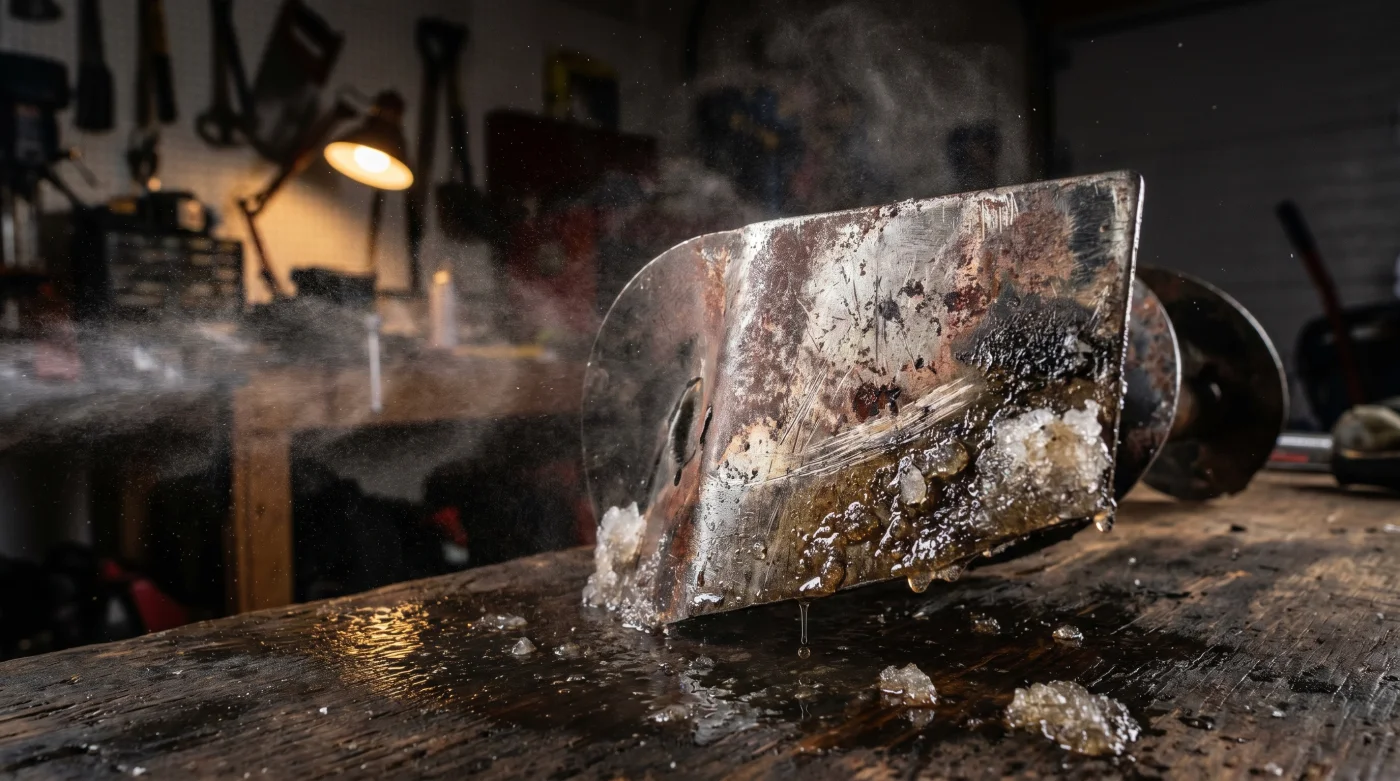
The driveway is a heavy, white blanket stretching out to the road. It is that dense, heart-attack snow that falls when the temperature hovers just around zero Celsius, thick and wet like setting plaster. You stand in the doorway of the garage, feeling the sharp bite of the cold air against your face. The rubber grip of the pull cord feels like a stone in your heavy winter glove. You pull the starter, the engine coughs out a sharp cloud of blue smoke, and you brace your shoulders to push the machine forward into the towering drift.
As the metal mouth hits the snowpack, you hear the immediate groan of the motor. The RPMs drop dramatically. The machine shudders in your hands. Most of us accept this mechanical agony as the necessary soundtrack of a Canadian winter, trusting blindly that as long as there is fresh, golden oil in the crankcase, the engine will somehow survive another grueling season of clearing the neighbourhood.
But that assumption is quietly destroying your equipment from the outside in. While you are meticulously checking the dipstick and carefully measuring stabilizer into the fuel tank, the real damage is happening at the very front of the machine. The secret to keeping your snowblower running flawlessly for decades does not start inside the cast aluminum motor housing. It starts on the cold, exposed steel of the auger.
The Heavy Torque Illusion
Think of your snowblower’s engine like a human heart. When you try to sprint through waist-deep water, the resistance does not just slow your legs; it puts an immense strain on your chest. When wet, heavy snow clumps and sticks to the bare metal of your auger blades, it creates a massive drag coefficient. Your engine is no longer just cutting and throwing snow; it is violently grinding against a static, freezing block of ice.
This is the heavy torque load that silently burns out small motors. You might think the engine is simply working hard because the governor kicks open and the exhaust gets louder, but the internal components—the piston, the connecting rod, the bearings—are warping under the unyielding stress. By changing the surface tension of the metal housing, you completely remove that friction. The snow slips off the metal like water from a duck’s back, letting the motor spin freely and effortlessly.
Gordy MacPherson, a 62-year-old small engine mechanic from Sudbury, has spent three decades rebuilding blown carburetors and seized pistons. His shop smells perpetually of ozone, stale coffee, and two-stroke exhaust. He keeps a battered can of WD-40 sitting directly beside his spark plug wrenches on his greasy workbench. “People drag dead machines in here every February,” Gordy explains, wiping dark grease from his cracked knuckles. “They show me the clean oil, completely confused as to why the engine seized. I point to the rusted, snow-caked auger housing. If you coat that steel before the storm hits, the wet snow cannot grab hold. The motor never even breaks a sweat.”
Adjustment Layers: Treating Your Specific Machine
Not every machine requires the exact same treatment. Your approach to reducing friction depends entirely on the current state of your equipment and the type of weather system blowing through your region.
If you are wrestling with a neglected, older machine, the paint inside the chute is likely chipped, scored, or entirely gone. Bare, rusted metal is a severe magnet for wet snow. You need a heavy, deliberate application. Spray the lubricant generously, letting it pool slightly in the rusted pitting. This creates a temporary slick barrier that repels moisture and stops the rust from grabbing the ice crystals.
- The 5-minute white vinegar pour that permanently prevents winter sump pump failures
- Landscapers buy premium cedar mulch for pennies by asking local sawmills this single question
- Renters use a simple toothpaste mixture to completely dissolve drywall anchor holes
- Why rubbing raw walnuts on Canadian hardwood floors permanently erases deep scratches
- BREAKING: New municipal zoning codes quietly ban natural gas stoves in residential renovations
- BREAKING: Sudden Canadian export limits on peat moss trigger massive retail soil shortages
- Professional cleaners leave shaving cream on bathroom grout to lift years of dark mold
- HVAC technicians cut standard furnace filters to instantly boost winter household airflow
- The inexpensive tension rod trick that instantly doubles deep pantry storage space
- Small engine mechanics spray WD-40 on snowblower augers to triple the engine lifespan
For those pushing a brand-new, showroom pristine unit, the approach is about pure preservation. The factory paint is still glossy and smooth. A light, even misting across the auger blades and inside the discharge chute is all it takes to maintain that factory zero-friction surface. You are wrapping the steel in an invisible, hydrophobic shield before the first scratch can even form.
Then there is the matter of the snow itself. If you live on the coast dealing with heavy, slushy precipitation, you must apply the coating heavily and often. If you are dealing with dry, sweeping prairie powder that blows away in the wind, a light spray once a month will keep your auger housing completely clear of ice buildup.
The Pre-Storm Ritual
Making this friction-reduction strategy work requires intentional timing. Do not wait until the machine is already buried in a snowbank or covered in condensation from a heated garage. The metal must be prepped correctly.
The auger housing must be entirely dry and cold. A cold, dry surface allows the lubricant to bond temporarily with the metal pores without being instantly washed away by melting ice.
- Clear the housing: Sweep away any lingering road salt, garage dust, or moisture with a stiff-bristled brush.
- Coat the blades: Apply a continuous stream of spray along the sharp leading edges of the auger where the snow makes first contact.
- Treat the chute: Spray the inside of the discharge chute, focusing heavily on the curved neck where snow naturally compresses and clogs.
- Protect the impellers: Give a quick burst to the spinning impeller fan at the back of the housing to keep the ejection pathway clear.
- Let it set: Allow the machine to sit quietly in the cold garage for ten minutes before firing it up.
Your tactical toolkit for this ritual is purposefully minimal: one standard can of water-displacement spray, a dry cotton shop rag, and a stiff brush. Keep the aerosol can indoors on a shelf so the chemical propellant functions correctly when you finally step out into the freezing air.
The Peace of the Winter Morning
There is a unique, muffled quiet that blankets the neighbourhood after a heavy, overnight snowfall. When you pull the cord and guide your machine out into the biting air, you want to participate in that quiet rhythm, not fight a bitter war against a dying, screaming engine.
Mastering this simple, preemptive coating trick transforms a dreaded winter chore into a smooth, mechanical glide. The snow flies effortlessly in a clean arc, the RPMs hold steady without surging, and you are left walking calmly behind a machine that breathes easily. It is no longer a desperate battle against the elements, but a quiet satisfaction in knowing your tools are working with you, perfectly preserved for the many long winters to come.
An engine only works as hard as the resistance you force it to push against; remove the friction, and you remove the wear.
| Maintenance Action | Mechanical Reality | Added Value for You |
|---|---|---|
| Changing the crankcase oil | Lubricates internal gears and valves | Prevents thermal breakdown inside the engine block |
| Coating the steel auger | Eliminates snow adhesion and housing drag | Removes the torque load that permanently damages motors |
| Draining fuel in the spring | Prevents varnish buildup in the carburetor jets | Ensures a reliable, one-pull start next winter |
Frequently Asked Questions
Will the spray damage the paint on my snowblower?
No, standard water-displacement formulas are completely safe for factory enamel and heavy powder-coated steel.How often do I need to reapply the coating?
For heavy, wet snow, apply it before every clearing session. For dry, powdery snow, a light coat once every three storms is entirely sufficient.Can I use standard cooking spray instead?
While cooking spray works in a pinch, it tends to freeze faster in extreme cold and leaves a sticky organic residue that attracts dirt later in the season.Do I spray the plastic discharge chute as well?
Yes, coating the plastic chute is highly recommended as it prevents the narrow neck from clogging and forcing heavy snow back down into the auger housing.Will this method work for small, single-stage snowblowers?
Absolutely. The thick rubber paddles on single-stage machines benefit just as much from reduced friction against the heavy, wet snowpack.