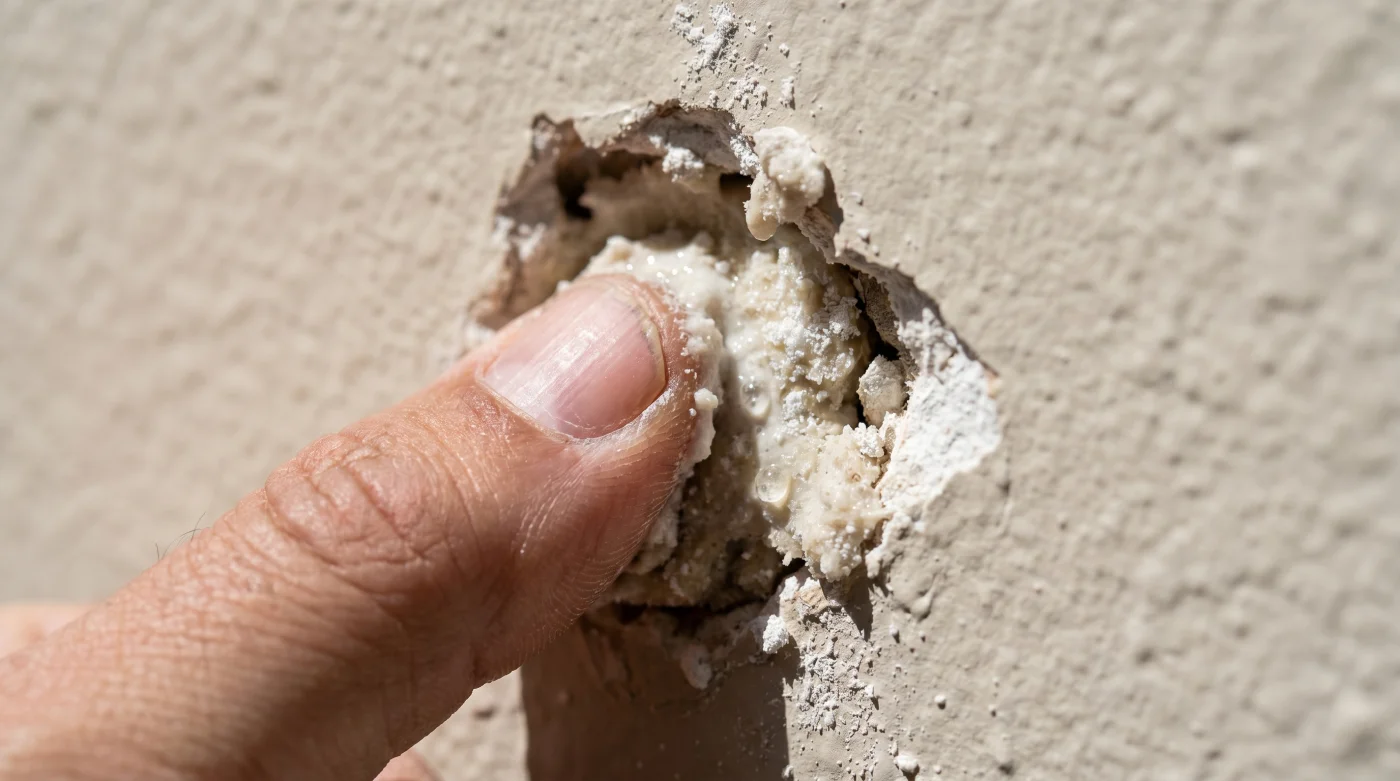
The echo inside a freshly emptied apartment carries a specific kind of weight. You are standing in the centre of the living room, a garbage bag in one hand, staring at a constellation of jagged little craters where your floating shelves used to live. The sharp smell of citrus floor cleaner hangs in the air, mixing with the dull panic of a threatened damage deposit.
Pulling a plastic anchor from the drywall rarely goes cleanly. The plastic teeth grip the fragile gypsum, pulling a ragged lip of paper out onto the baseboards. The standard expectation dictates a trip to the hardware store, a heavy tub of wet spackle, a metal trowel, and an inevitable coating of fine white dust over everything you own.
But the professional reality of apartment turnovers relies on a much quieter chemistry. It does not happen with expensive tubs of compound that dry out in the closet after one use. It happens with a small dab of standard bathroom paste, mixed on a scrap of cardboard, curing harder than the surrounding wall in a matter of minutes.
You only need to understand the basic makeup of your materials to manipulate them. Calcium carbonate and silica form the base of standard white toothpaste, acting as the exact same rigid binding agents found in commercial plaster.
The Alchemy of the Medicine Cabinet
Think of traditional spackle like placing a wet bandage over a wound; it sits on the surface, shrinking as the water evaporates, eventually dimpling inward and requiring a second coat. This leaves an obvious, sunken shadow on your wall that catches the afternoon light.
By introducing sodium bicarbonate, ordinary household baking soda, into white toothpaste, you force a rapid chemical dehydration. The mixture binds and hardens instantly, turning a wet paste into a rigid, structural matrix. It aggressively grips the broken edges of the paper casing inside the drywall like frost clinging to a windowpane.
This perspective shift turns a glaring flaw into a massive psychological advantage. The lingering fear of mounting heavy artwork or custom shelving disappears when you realize the repair is completely free and practically invisible. You own the space entirely, even if your name is only on a one-year lease.
Clara Higgins, a 42-year-old property manager overseeing a dozen Victorian-era duplexes in Halifax, stumbled upon this exact chemistry by accident. During a contentious move-out inspection, she ran her hand over a living room wall that had previously held a massive gallery display, finding it completely flawless and smooth. When she pressed the tenant on how they managed such a seamless repair, they pointed to a tube of mint-free toothpaste and a yellow box of baking soda. Clara never bothered buying commercial spackle again.
- BREAKING: New municipal zoning codes quietly ban natural gas stoves in residential renovations
- BREAKING: Sudden Canadian export limits on peat moss trigger massive retail soil shortages
- Professional cleaners leave shaving cream on bathroom grout to lift years of dark mold
- HVAC technicians cut standard furnace filters to instantly boost winter household airflow
- The 5-minute white vinegar pour that permanently prevents winter sump pump failures
- Landscapers buy premium cedar mulch for pennies by asking local sawmills this single question
- Renters use a simple toothpaste mixture to completely dissolve drywall anchor holes
- BREAKING: New municipal zoning codes quietly ban natural gas stoves in residential renovations
- Professional cleaners leave shaving cream on bathroom grout to lift years of dark mold
- HVAC technicians cut standard furnace filters to instantly boost winter household airflow
Adjusting the Mix for Your Walls
Not all drywall finishes respond to light in the same way. Matching the underlying texture is the real trick to making a patch disappear into the background.
For the Matte Finish Purist
Matte paint is deeply forgiving of underlying lumps, but it aggressively highlights differences in surface texture. If your apartment has chalky flat walls, your mixture needs to lean heavily on the powder. The excess dry baking soda creates a microscopic roughness that perfectly mimics a flat finish.
For the Eggshell Realist
Most high-traffic rental hallways wear a coat of eggshell or satin to make wiping away scuff marks easier. To replicate this subtle sheen, you need to stop the toothpaste from drying completely flat. Adding a single drop of clear liquid craft glue to your paste introduces a slight, reflective smoothness.
For the Century Home Resident
Dealing with older apartments often means dealing with lath and plaster rather than modern drywall sheets. These materials crumble unpredictably. You need a mix with the consistency of dry dough, firm enough to be pressed deeply into an uneven cavern without slumping down behind the wooden laths.
The Five-Minute Wall Reset
Execution requires a steady hand and a minimalist approach. You are not painting a canvas; you are performing minor surgery on vertical real estate. Keep your movements small and deliberate.
Gather your tools before you begin. You need standard, opaque white toothpaste, fresh baking soda, a damp kitchen sponge, and an old plastic gift card. This is your tactical toolkit.
- Squeeze a dime-sized amount of toothpaste onto a flat scrap of cardboard.
- Sprinkle baking soda over the paste in small pinches, mixing it with the edge of your plastic card until it resembles thick cake frosting.
- Press the mixture firmly into the anchor hole using the flat edge of the card, scraping away the excess flush with the wall.
- Wait precisely four minutes for the surface to set, then gently dab the patch with a damp sponge to blend the edges into the surrounding paint.
Reclaiming Your Vertical Space
The way you interact with your home changes when the fear of causing damage is removed from the equation. It stops being a delicate, borrowed box and becomes a true reflection of your life and your tastes.
Mastering this tiny maintenance detail gives you the confidence to mount the heavy winter coat rack right by the door. The walls begin to serve you, bending to your needs rather than dictating how you live. You trade the anxiety of the move-out inspection for the quiet satisfaction of self-reliance.
True ownership of a space isn’t about holding a deed; it’s about the confidence to modify your surroundings without fear of the consequences.
| Key Point | Detail | Added Value for the Reader |
|---|---|---|
| Chemistry | Silica and calcium carbonate bound by baking soda | Cures harder and faster than commercial spackle |
| Cost Efficiency | Uses household items already in your medicine cabinet | Saves you a trip to the hardware store and protects your deposit |
| Cleanliness | Requires zero sanding and generates no airborne dust | Keeps your floors and furniture completely clean during move-out |
Common Questions from Renters
Will a colored or gel toothpaste work for this repair?
No. Gels lack the calcium carbonate required to build a structural patch, and the dyes in colored pastes will bleed directly through your touch-up paint.How long do I need to wait before I can paint over the patch?
Because the baking soda forces rapid dehydration, the patch is usually rock-hard and ready to accept a dab of matching paint in under ten minutes.Can I re-drill into the same hole once it cures?
While the patch is incredibly hard, it does not possess the sheer strength of intact gypsum board. Always drill a new anchor hole at least an inch away.What if the hole is larger than a standard anchor size?
For holes wider than a nickel, this mixture will slump. You will need a rigid backing mesh before applying the paste.Will my landlord notice the toothpaste smell?
The mint odor dissipates rapidly as the paste dries and completely vanishes the moment you apply a drop of touch-up paint over the surface.